
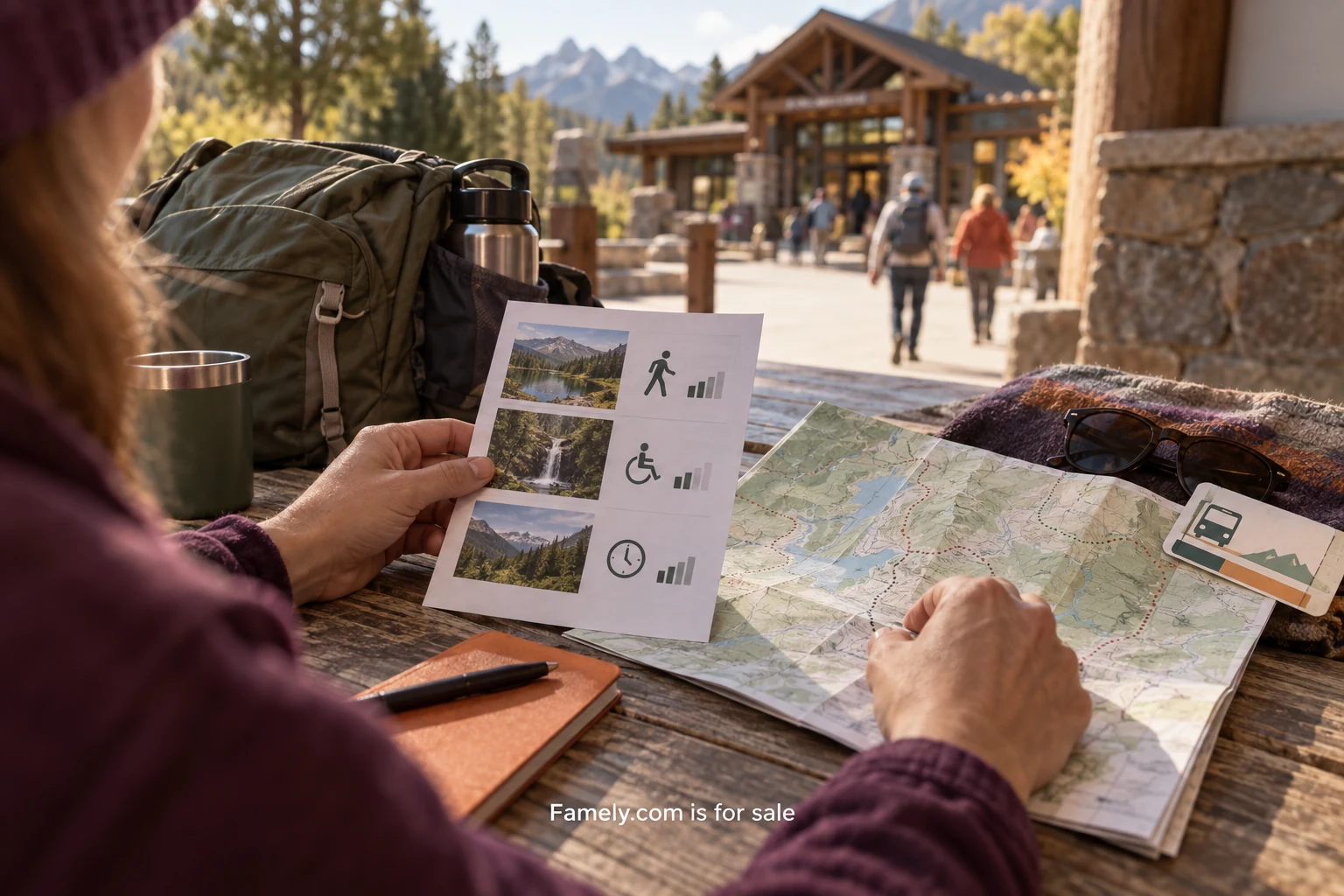
A family outing listing has to answer a practical question: can this particular group make this visit work? A beautiful image and an enthusiastic description are only part of the answer. The adult making the booking also needs to understand travel, timing, facilities, total cost and what happens when plans change. Missing details create uncertainty at exactly the moment the listing asks for a commitment.
This guide helps editors and experience businesses write a useful listing. It uses an illustrative neighborhood workshop as a worked example rather than describing a real event for sale. The approach applies to a museum session, a garden visit or another activity purchased by adults. The details should always come from the actual provider and be checked close enough to the visit to remain useful.
Start with the activity and its limits
The first paragraph should say what participants will do, where they will do it and how long the activity lasts. “A ninety-minute clay hand-building workshop in a ground-floor studio” gives a reader something to evaluate. “An unforgettable creative adventure” gives little help with a calendar or a practical decision.
State the provider’s age suitability and adult supervision requirements accurately. Do not infer those from a photograph of previous visitors. Explain whether every attendee needs a ticket and whether an accompanying adult participates or observes. A booking form that reveals these distinctions only after someone chooses a time can force them to start the decision again.
Show the real time commitment
A session’s duration and the total visit are different. Include the recommended arrival time, the activity length and any likely collection or departure steps. If work must be fired and collected later, say so before the booking button. A person traveling from another town may not be able to return the following week.
For the example workshop, the listing might explain that doors open fifteen minutes before the start, the teaching session lasts ninety minutes and finished pieces are collected on a later date agreed with the studio. These are illustrative details, not universal pottery rules. The editor’s job is to replace each with the provider’s confirmed arrangements.
Make travel information usable
Give the full address and an identifiable entrance. A large venue may have several gates, while a small studio may sit behind a shopfront. Include the nearest useful transport stop and link to the provider’s travel guidance. If parking is limited or separate from the venue, state that clearly rather than using a generic parking icon.
The Natural History Museum’s getting here page is a useful example of dedicated arrival information. A listing can link to such a page while still summarizing the detail most likely to affect the decision. Do not assume that a map pin explains which entrance is accessible or where a visitor should queue.
Describe access with concrete information
“Accessible” is too broad to answer every visitor’s needs. Report confirmed details such as step-free entry, lift availability, seating, toilet facilities and the distance between activity areas. Include a contact route for questions the listing cannot answer. Avoid interpreting a venue’s silence as confirmation that a facility exists.
The museum’s South Kensington accessibility guidance separates resources and practical information, while its visual guide helps visitors understand the sequence of arrival. Those structures are useful references. Each provider still needs to confirm the facts for its own building and activity.
Explain the complete booking cost
List what the ticket includes and which extras are optional. Materials, equipment, booking fees, parking, food and later delivery can all change the amount a household expects to spend. If a booking platform adds a charge, make that visible before the final payment stage. A low headline price followed by unavoidable additions undermines the listing’s usefulness.
For the sample workshop, the editor would ask whether clay, tools, firing and collection are included. If delivery is available for a separate charge, explain how it is arranged. If an accompanying adult needs a ticket even when not making an item, that belongs beside the price rather than in a distant frequently asked questions page.
Include the ordinary facilities
Readers often need to know whether there are toilets, a place to sit and permission to bring food. These details may sound less exciting than the activity, but they help an adult judge the outing’s shape. State whether refreshments are sold on site and whether leaving during the session affects re-entry.
For outdoor activities, describe shelter and the provider’s approach to weather. A listing should distinguish an activity that proceeds in light rain from one that is canceled under specific conditions. Tell readers where updates appear and when they should check. Avoid inventing a weather policy simply because a backup plan would make the copy feel more complete.
Put cancellation rules near the decision
A visitor should be able to find the provider’s change and cancellation terms before booking. Summarize the key practical points accurately and link to the full current policy. The Natural History Museum publishes ticketing terms that distinguish circumstances and conditions; other venues have their own rules. One provider’s policy should never be generalized to a whole category.
Ask what happens if the customer cannot attend and what happens if the provider cancels. These are separate situations. If a booking can be transferred, specify the process only after confirmation. If the terms are unclear, obtain clarification from the provider rather than softening the uncertainty with “flexible booking” language.
Write a compact worked listing
A useful draft for the illustrative workshop could read: “Make a small clay vessel during a ninety-minute guided session. Materials and the studio’s stated finishing process are included. Arrive fifteen minutes early at the street-level entrance. Check the provider’s suitability guidance and ticket requirements for every attendee before booking. Finished work is collected later; confirm the collection date if you are traveling.”
The draft deliberately leaves room for verified specifics. Below it, add the actual date, full address, price, facilities, access details and cancellation link. Each item should be easy to scan on a phone. The description can still have personality, but the practical information should not require the reader to decode a story.
Keep editorial promises within the evidence
A phrase such as “quiet session” needs a basis. Does the provider limit attendance, reduce background music or offer a designated time? Explain the concrete arrangement instead of making a broad comfort guarantee. Likewise, “suitable for beginners” should reflect the provider’s teaching plan, equipment and stated expectations.
Use photographs that represent the actual activity and disclose illustrative imagery where it could otherwise mislead. A wide, empty room may not represent a busy weekend session. Ask the provider which image best shows the space participants will use. The goal is to reduce surprises, not to make every venue appear identical.
Build an update habit
Give the listing an internal owner and a checked date. Before featuring it again, confirm the schedule, booking link and any time-sensitive facilities. Keep a short record of changes so an editor can identify which facts need rechecking. A repeated customer question should become a visible improvement to the listing.
To audit a current page, read it as an adult with a limited window, a fixed budget and one practical access question. Can that person decide whether to book without sending three messages? If not, identify the missing fact and ask the provider. A listing earns its place by helping someone make a sound decision, including the decision to choose a different outing.